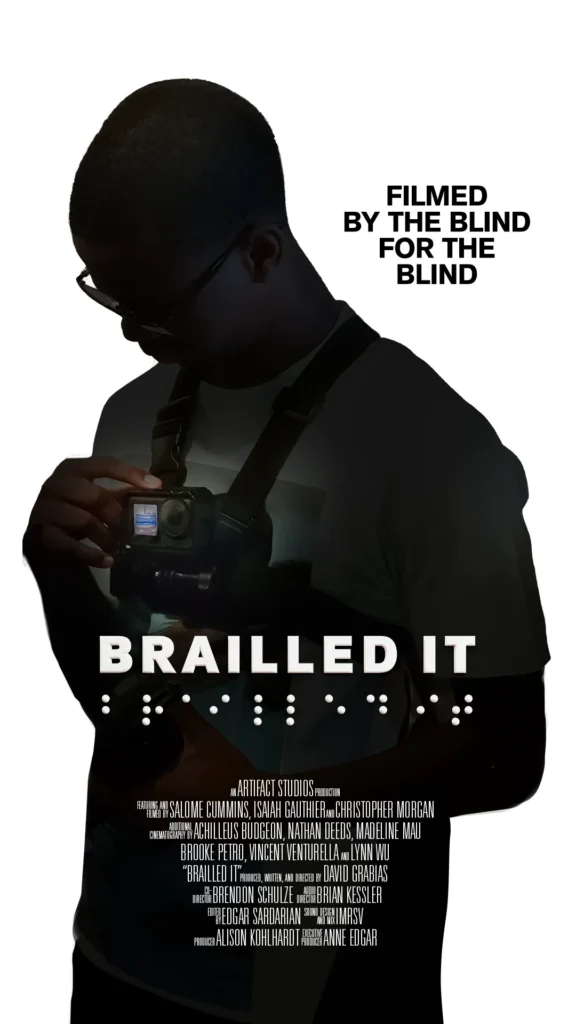
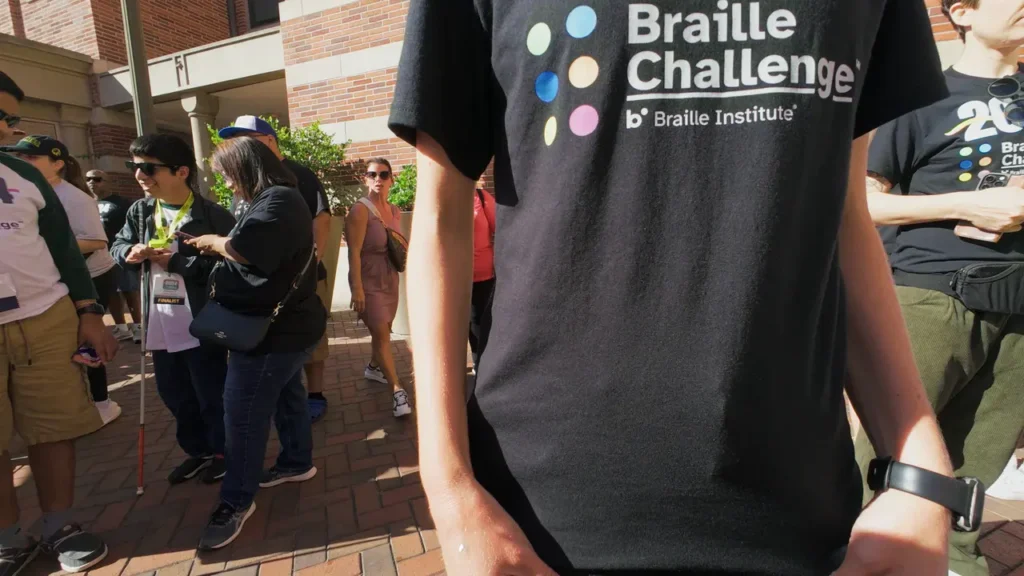
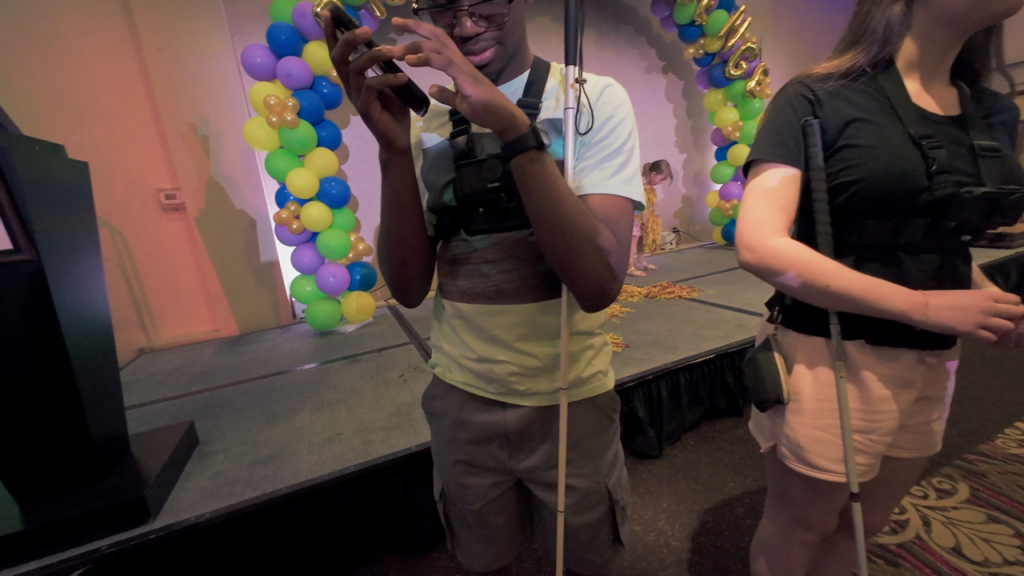
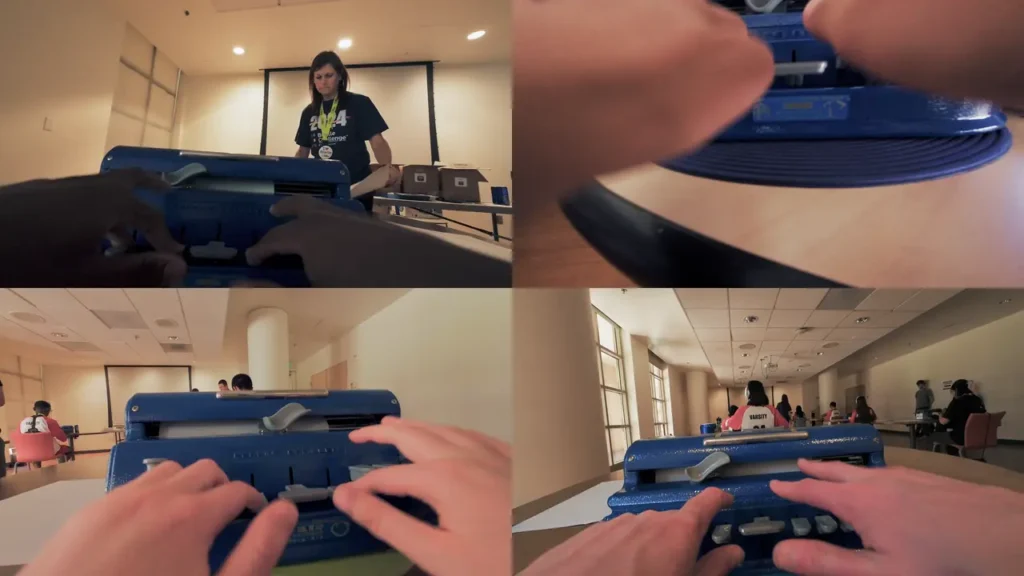
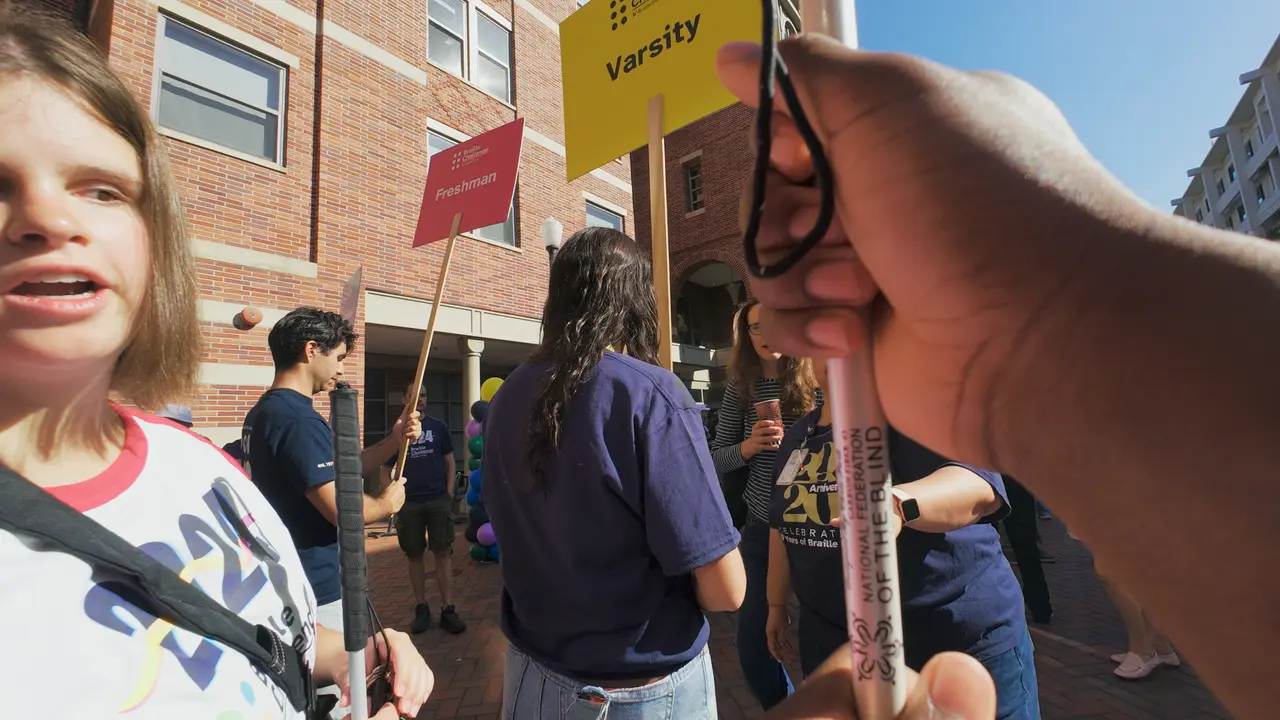
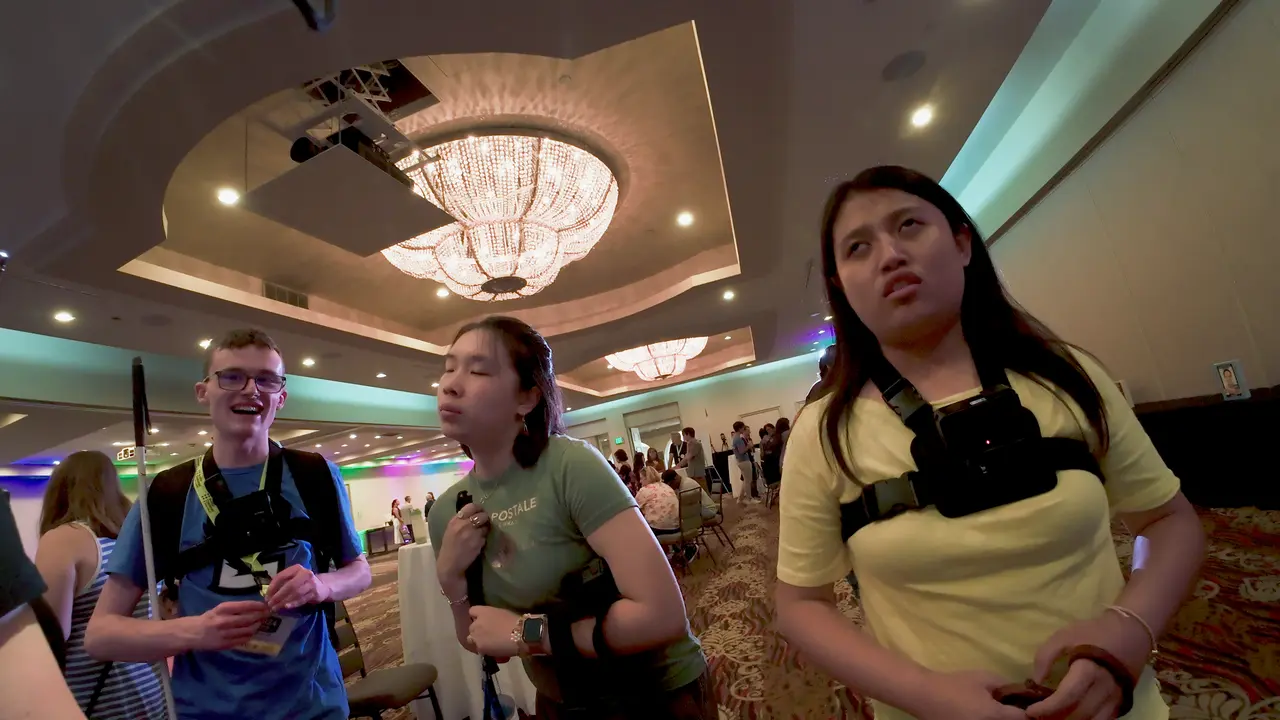
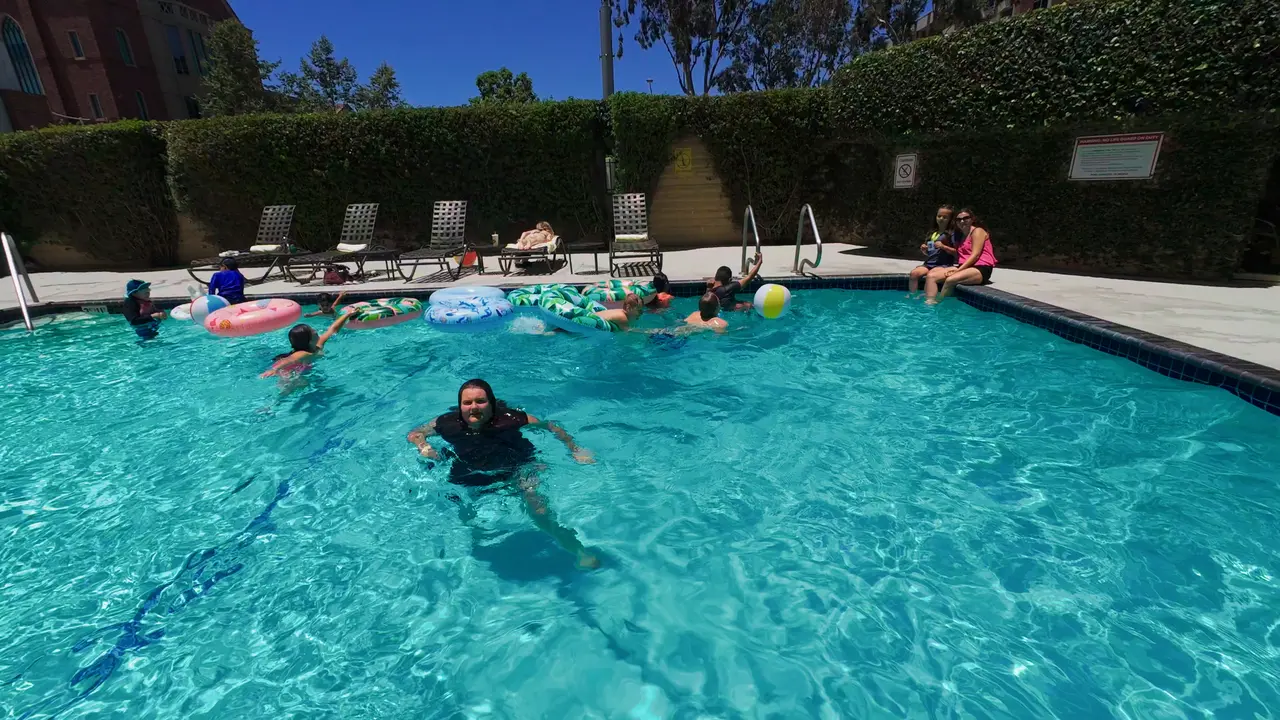
Every year, the best under-18 braille readers and writers in the English-speaking world come to Los Angeles to compete in the Braille Challenge. For one weekend, these blind and low-vision kids aren’t the minority in the room, as they make new friends, go head-to-head against old rivals, and strive for the rare opportunity to be recognized for something beyond their disability. Empowering them to become filmmakers, BRAILLED IT gives these kids cameras and has them document the event on their own. Their often-disorienting cinematography challenges sighted audiences to follow the action on their terms, with audio description and binaural sound helping audiences understand this unique cinematic world through non-visual cues. Ultimately, the kids’ honest, personal, and emotional footage makes the human drama of their experience—and the true power of literacy—accessible for all.
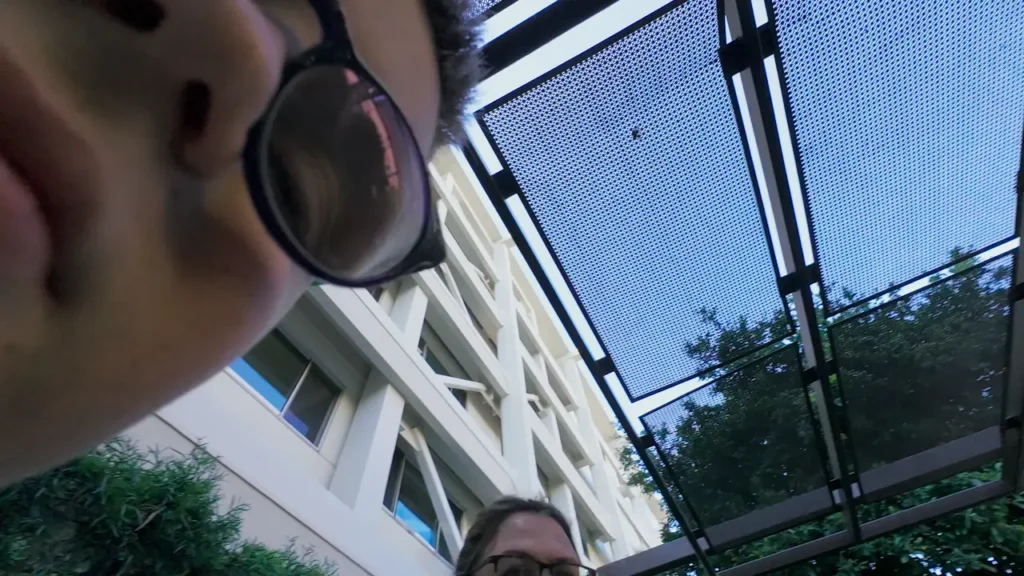
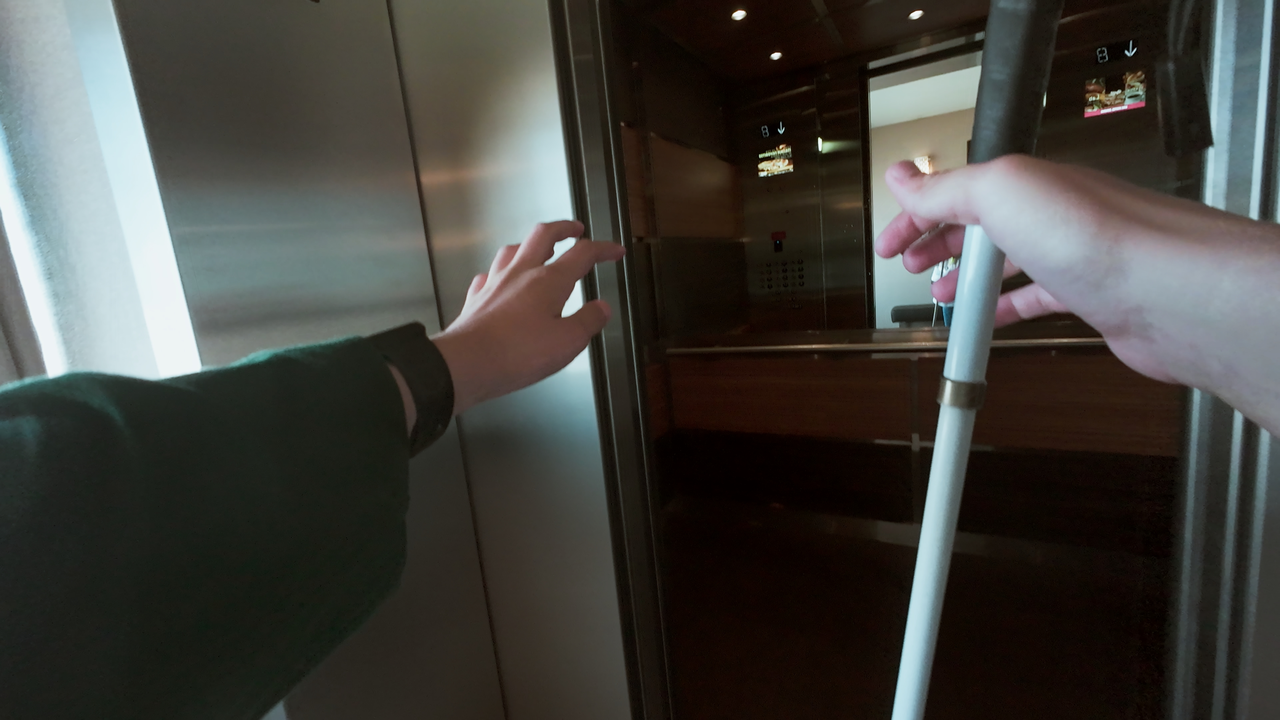
A labor of love, BRAILLED IT is the result of a rigorous creative process aimed from the beginning at making work in as collaborative and accessible a way as possible. While the filmmaking team initially experimented with ways to document blind youth competing at the Braille Challenge, it quickly became clear that the kids needed to tell the story themselves, so we made them our cinematographers—discussing what it meant to be both the subject of a film and the person doing the filming, training them on the equipment, and empowering them to choose what to capture and how. As our editorial collaborators reviewed the footage, it became apparent that these kids were developing their own cinematic language: cameras pointed away from the scene, faces rarely shown, audio prioritized over picture—an approach that may initially frustrate sighted audiences but ultimately invites them into a new perspective.
We also thought deeply about Audio Description and how it could serve as a creative tool for blind and sighted audiences alike, alongside open captions in a hyperlegible font designed for low-vision viewers—features we believe make the film stronger. Because film and video remain largely inaccessible to blind audiences who have long been denied media-making tools, we hope BRAILLED IT inspires real change by reimagining what cinema can be and how it can be made and consumed. Our subjects remain as positive about the filmmaking experience as they were at the start and continue as enthusiastic collaborators in shaping our outreach campaign; together, as a team of sighted and blind filmmakers, we hope BRAILLED IT inspires you to consider what blind filmmaking can be. We know these goals are ambitious, but you have got to dream big. Thank you for taking the time to watch and consider BRAILLED IT. —David Grabias
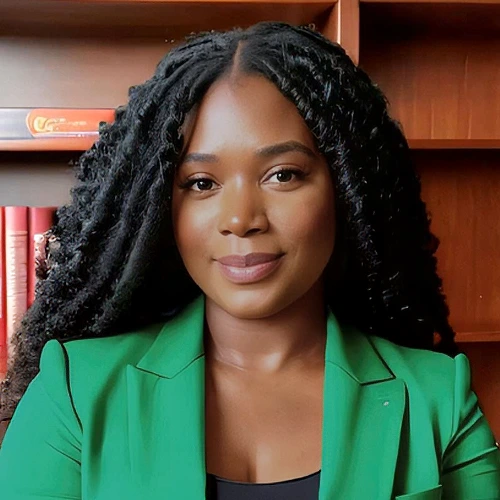
Conchita was born in Mexico and raised in California. She advocates for the rights of blind children and their families in school systems across the United States and abroad. She holds a doctorate in Special Education from George Washington University and serves on the National Board for Education Sciences. She also founded METAS, a nonprofit training educators in Latin America, and cofounded the National Coalition of Latinxs with Disabilities to advance disability inclusion and policy.
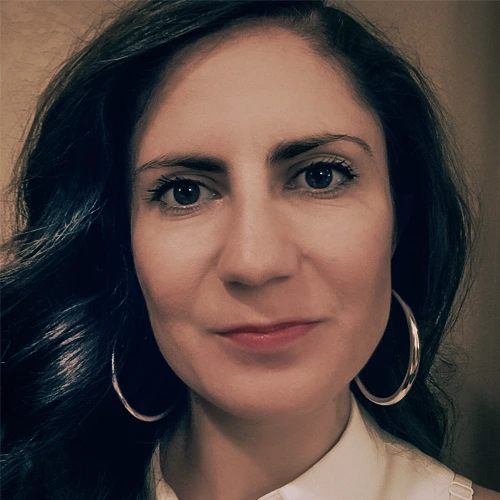
Rachel began working in the blindness field in 2017 as Program Manager for the Massachusetts Commission for the Blind. After moving to California, she joined the Braille Institute, where she now oversees International Programs, including Braille Challenge and Cane Quest—initiatives that advance braille literacy, education, and community for blind and low-vision youth. Under her leadership, Braille Challenge is hosted in the United States, Canada, the United Kingdom, Australia, Ireland, and Kenya, empowering students worldwide. Rachel develops programs that deliver meaningful access, measurable impact, and lasting communities, connecting ideas and people across the globe.
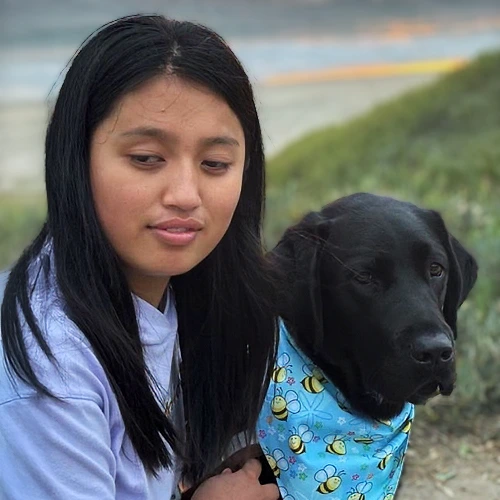
Lynn is a sophomore at Stanford University who has been fully blind since age nine. A longtime competitor in the Braille Challenge, she is a strong advocate for braille literacy and accessible education. She has worked with multiple organizations on outreach and disability awareness and hopes to use her lived experience to connect with wider audiences. Lynn is committed to expanding conversations around inclusion, representation, and the importance of braille for blind youth.